
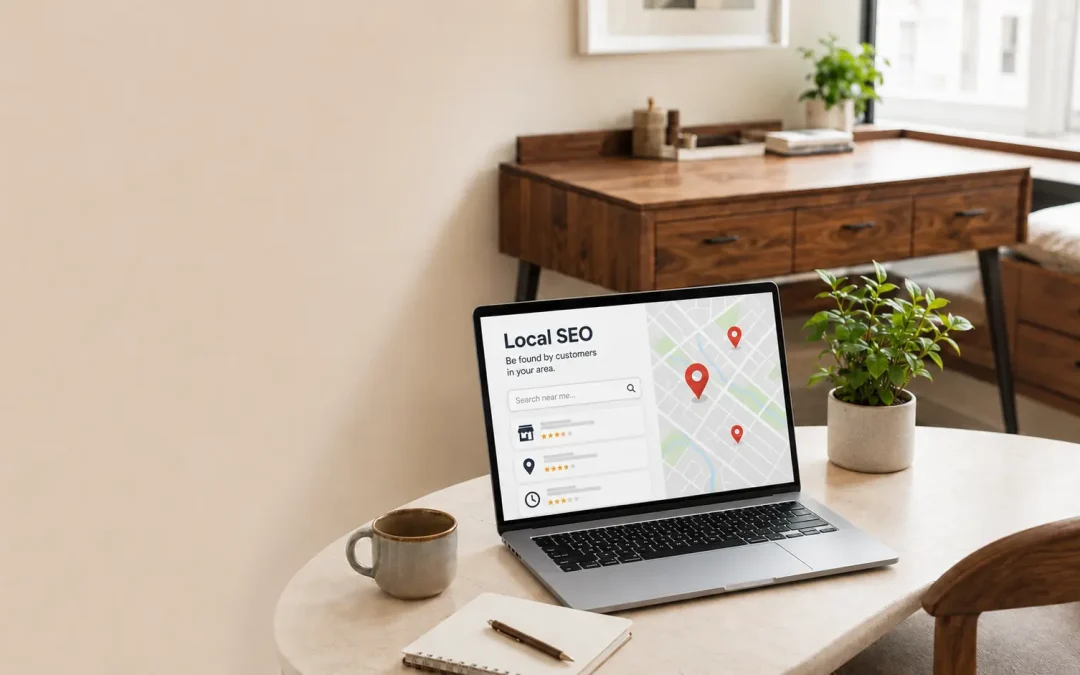
People use Google every day to look for businesses nearby. They might be searching for a furniture store, a roofer, a dumpster rental, a deck builder, or another local service. Most of the time, they want answers fast.
Let’s walk through a customer’s journey to see how local SEO helps connect their needs with the business they end up choosing.
Meet Sara. She needs a solid wooden desk for her new home office, so she grabs her phone and searches Google for furniture stores. What happens next shows why local SEO matters.
Moment 1: The Customer Starts Searching
Sara searches for “furniture stores near me.” Since she lives in Asheville, North Carolina, Google quickly shows her furniture stores in her area.
Local SEO helps Google know where your business is located. That way, when people search for your town, county, or type in “near me,” your business shows up in the results.
Moment 2: They Scan the First Results
After searching “solid wood desk near me,” Sara sees a list of local furniture stores on Google. She gets an overview of a few different furniture stores.
Sara doesn’t look closely at every company. She scans the list, looking for a business that seems trustworthy and easy to reach. Good local SEO helps your business stand out in these first results.
If your business has good reviews and clear products, Sara is more likely to choose you. But if your business doesn’t show up clearly, she might never find your website.
Moment 3: They Check Your Google Maps Profile
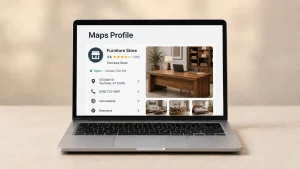
Before visiting a furniture store’s website, Sara might check its Google Maps Profile. This is often where customers get their first impression. She might quickly check:
- Reviews
- Photos
- Hours
- Products
- Location
- Contact details
If the profile looks complete and up to date, she feels more confident. If it looks old or confusing, she may pick another company.
This is why your Google Maps Profile matters. It helps customers decide if your business looks trustworthy enough to learn more. A strong profile can make the difference between someone choosing you or moving on.
Moment 4: They Read Reviews
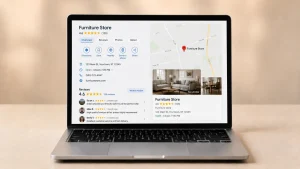
After checking a furniture store’s Google Business Profile, Sara reads reviews. She wants to know what other customers experienced before trusting the store with her home office furniture.
Recent reviews show the business is active. Detailed reviews help Sara picture what it’s like to work with the company. Replies from the business also matter because they show professionalism and that the company cares about feedback.
Good reviews can ease doubts and give customers more confidence to learn more about your business.
Moment 5: They Visit Your Website
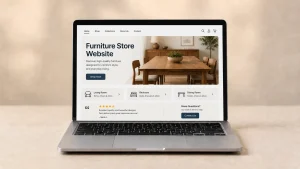
After reviewing the initial results, Sara may visit your website next. Now, she’s trying to see if your business is the right fit.
Your website should give clear explanations. Some things that can help with this are:
- Product pages
- Project photos
- Testimonials
- Contact buttons
Local SEO brings Sara to your website, but your website helps her decide whether to call, request a quote, or keep looking.
Moment 6: They Look for Their Location
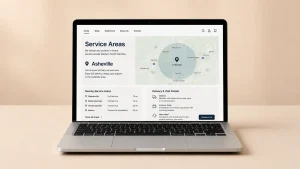
After visiting a furniture store’s website, Sara wants to make sure the store actually serves Asheville.
This is where clear local SEO is important. Your website should make it easy for customers to see which areas you serve, especially if you work in multiple towns, counties, or neighborhoods.
For Sara, a page that mentions solid wood desks in Asheville, nearby service areas, or examples of past projects in her region gives her more confidence. It shows the company is not just online, but can actually help in her area.
Clear service area details help both customers and search engines see when your business is the right local choice.
Moment 7: They Compare You With Competitors
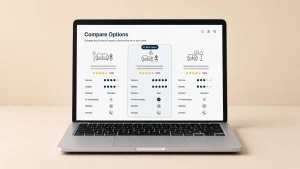
Sara might not call the first furniture store she finds. She could compare two or three options before deciding who seems most reliable. Now, small details matter. If one business looks clear and trustworthy and another looks old or hard to contact, her choice is easier.
This is where local SEO helps smaller businesses compete. You don’t have to be the biggest company in town. All you need to do is help customers feel confident that your business is the right choice.
Moment 8: They Look for Proof
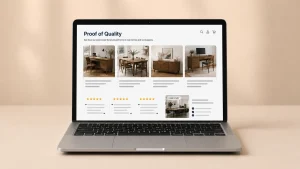
Before reaching out to a furniture store, Sara wants proof they can help her find the right desk. She will look for things like this:
- project photos
- Before-and-after examples
- Testimonials
- Case studies
This proof gives her more confidence. It shows the company has experience, does quality work, and has helped customers with similar needs.
Local SEO isn’t just about helping people find your business. It also helps them find the information that builds trust. The more proof Sara sees, the easier it becomes for her to choose you over someone else.
Moment 9: They Try to Contact You
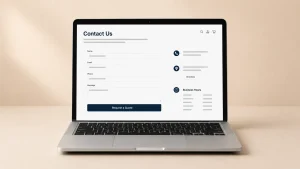
Now, Sara may be ready to take the next step. She might want to call, request a quote, get directions, fill out a contact form, or schedule an appointment.
This is where many businesses lose leads. If the phone number is hard to find, the contact form is confusing, or the website doesn’t clearly explain what to do next, Sara may leave and choose another furniture store.
Good local SEO should make it easy to contact you. Your Google Business Profile and website should both give customers clear ways to reach you. The easier it is for Sara to get in touch, the more likely her search will turn into a real lead.
Moment 10: They Choose a Business

Sara will choose a furniture store. The question is whether she picks yours or someone else’s.
By now, several things have shaped her decision. Did your business show up in search? Did your Google Business Profile look trustworthy? Were your reviews helpful? Did your website answer her questions? Was it easy to contact you?
Local SEO brings all these pieces together. It gives customers the information they need to find your business, trust what they see, and take the next step.
When your local SEO is strong, you’re not just hoping customers find you. You’re making it easier for the right customers to choose you.
Conclusion: The Customer Is Already Searching
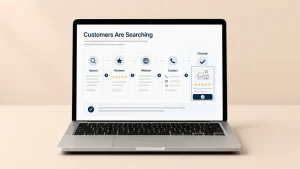
Sara’s search started with a simple problem: she needed a solid wooden desk for her new home office. Each step of the local search process helped her decide who seemed trustworthy, relevant, and easy to contact.
Local SEO helps your business show up at those key moments. When your Google Business Profile and website are clear and up to date, customers have fewer reasons to hesitate and more reasons to choose you.
The question isn’t whether people are searching. They already are. The real question is whether they’re finding your business or someone else’s.